There is a particular sound a breakfast table makes: the scrape of a knife through cold butter, the crackle of toast under pressure, the small clink of a spoon settling into a cup. Marmalade sits in the middle of it — sharp, translucent, faintly bitter. It is not the sweetest thing you could put on bread, and that is precisely why it works at seven in the morning.
How a Bitter Orange Ended Up on Every Table
The word itself came to Britain by a roundabout route. Marmelada was a Portuguese quince paste, thick enough to slice, and for a long time "marmalade" in English meant any fruit paste cooked down with sugar. The orange arrived later, and the version we know now — shredded peel suspended in a set jelly — took shape in Scotland.
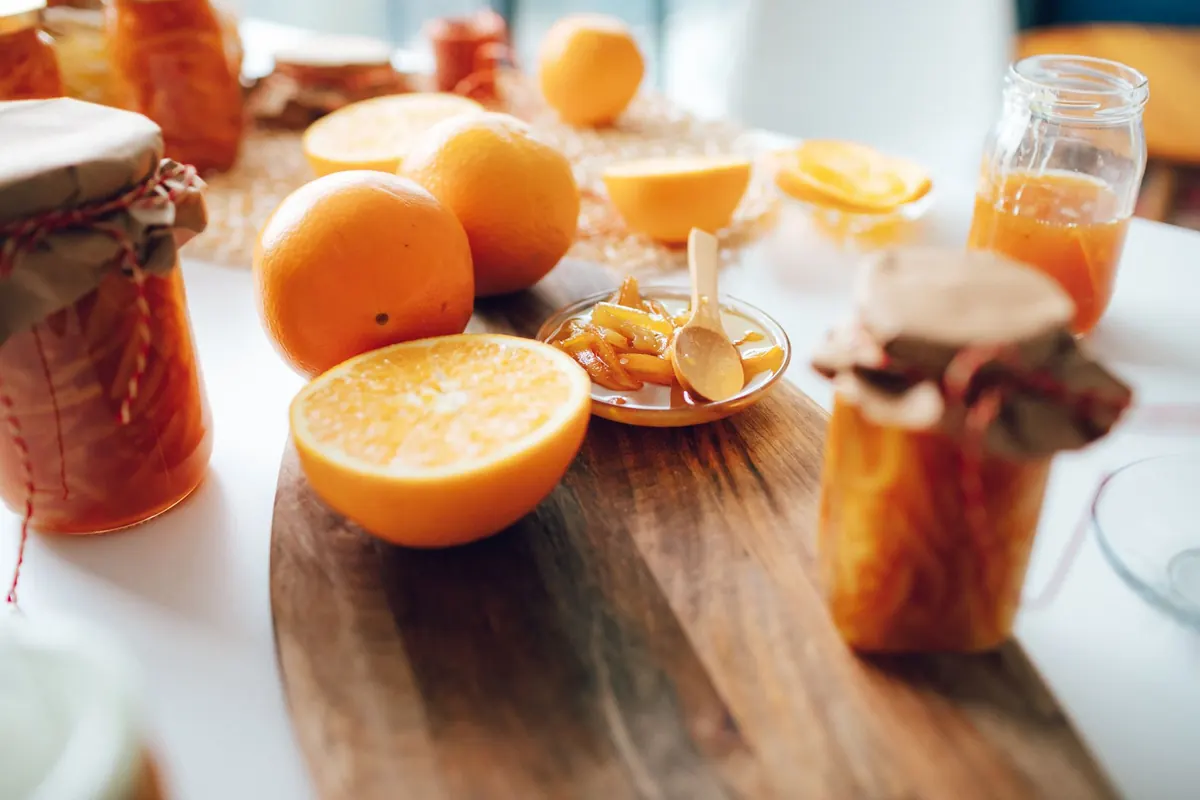
The story usually told is a good one: a Dundee grocer takes delivery of a cheap consignment of bitter Seville oranges, his wife turns the unsellable fruit into preserve rather than waste it, and a family business is born. Whether or not it happened quite that neatly, the outcome is not in doubt. Seville oranges, in season for a few short weeks each winter, have a peel so aromatic and a juice so sour that sugar transforms them into something greater than either. That is the whole trick of marmalade.
It spread because it kept, travelled and cost little. A jar on a working-class table was a way of putting fruit — flavour, colour, a bit of brightness — into a January morning when there was no fresh fruit to speak of. The habit stuck.
What Belongs on the Plate
A British breakfast is not one dish but a set of agreements. The full cooked version gets the attention, but the everyday version is quieter and, in most houses, far more common: toast, butter, marmalade, tea. Four things, and each one is doing a job.
The toast provides heat and texture. The butter provides fat and a barrier, so the marmalade sits on top rather than soaking straight in. The marmalade provides acid, bitterness and a hit of orange oil. The tea provides a long, tannic background that keeps the whole thing from turning cloying. Take any one away and the others have to work harder.
Regional tables fill in the rest. A Scottish breakfast might add a potato scone and a slice of black pudding. In Ireland, soda bread and a pot of strong tea. In England, bacon, egg and a grilled tomato, with the marmalade arriving afterwards as a separate course. Nobody is policing this. The point is the rhythm: savoury first, then something sharp and sweet to finish.
Why Bitter Works Before Nine
Sweet preserves are lovely, but they tire quickly in the morning. Honey, jam and chocolate spreads all land on the tongue the same way — soft, round, agreeable — and after three bites you stop noticing them. Marmalade refuses to be ignored. The peel brings bitterness, the juice brings acidity, and both cut through butter and fried food alike.
It also has a useful relationship with tea. Strong tea is astringent, drying slightly on the tongue; marmalade is oily and rich from the citrus peel. Each one softens the other. Coffee works too, particularly with a dark, bitter marmalade and a slice of well-buttered sourdough, though the pairing is blunter than tea and the orange can get lost.
Five pairings worth trying
- Assam with dark, coarse-cut marmalade. Malty and full-bodied, it stands up to thick shreds and a heavy hand with the butter.
- English Breakfast with a classic Keiller-style marmalade. The default for a reason: balanced, familiar, forgiving of slightly overdone toast.
- Earl Grey with lemon or grapefruit marmalade. Bergamot and citrus peel share a family resemblance; keep the marmalade light so the tea leads.
- Darjeeling first flush with thin-cut, pale marmalade. A delicate tea needs a delicate preserve. Use less than you think.
- Lapsang Souchong with whisky marmalade. Smoke on smoke. Best on a cold morning when you have nowhere urgent to be.
If you take milk, note that a very sharp marmalade and a milky cup can clash. Either go lighter on the milk or heavier on the tea.
Toast Technique, and Where It Goes Wrong
Most disappointing marmalade breakfasts fail on technique rather than ingredients. The order matters more than people expect.
- Take the jar out first. Fridge-cold marmalade stiffens the butter and tears the toast. Ten minutes on the counter is enough.
- Choose bread with structure. A white bloomer, a decent sourdough or a seeded wholemeal all hold up. Thin sliced, pre-sliced supermarket bread goes floppy under the weight of a good spoonful.
- Toast it darker than feels polite. You want colour across the surface and a dry, crisp edge. Pale toast turns to paste.
- Butter immediately, edge to edge. While the toast is hot, so it melts into the crumb rather than sitting on top. A thin, complete layer.
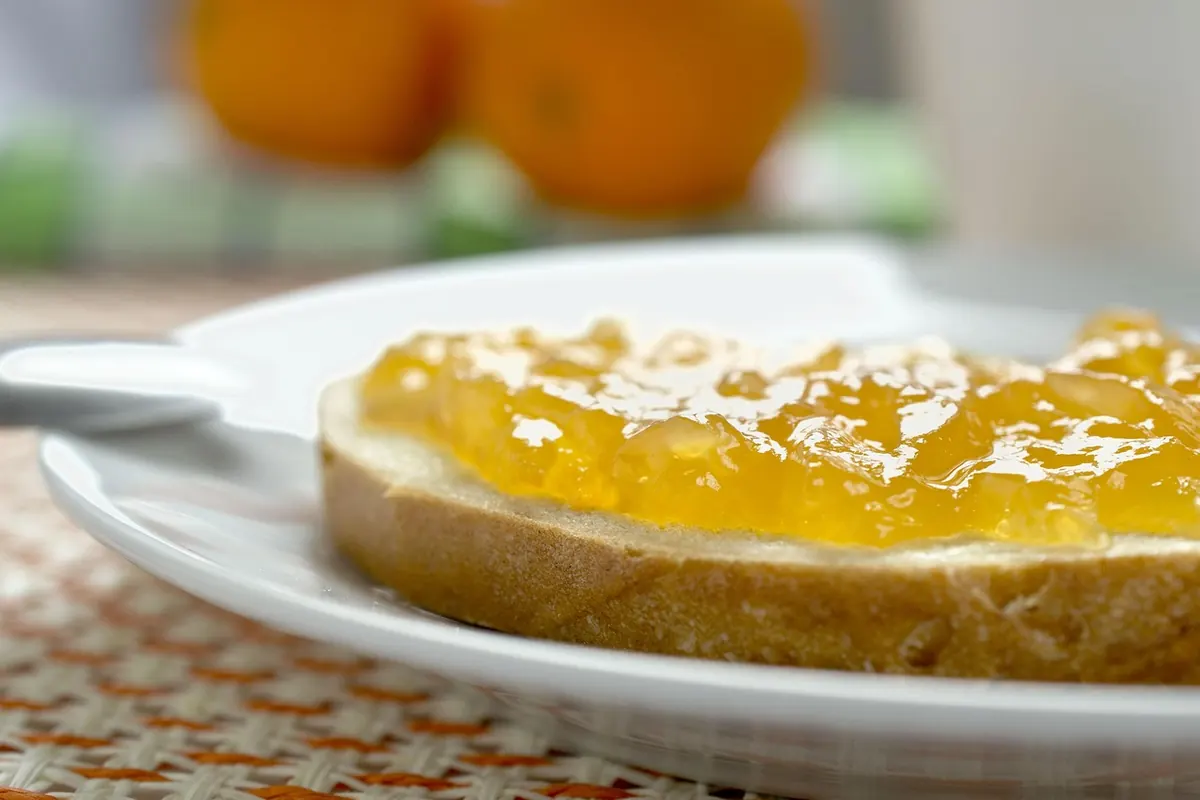
- Then marmalade, modestly. A heaped teaspoon per slice, spread to the crusts. If the shreds are long, snip them in the jar with scissors — an old trick that makes a firm set easier to spread.
- Eat standing up if necessary. Some things do not improve with sitting.
Beyond Toast
Toast is the classic, not the limit. A spoonful swirled through hot porridge, with a little extra butter, is one of the best winter breakfasts there is. Try it on a crumpet, where the holes fill with melted butter and marmalade in a way that flat bread cannot manage. A thin layer on hot buttered scone, or over thick yogurt with toasted oats, works better than it sounds. Cheddar and marmalade on oatcakes is a serious savoury-sweet combination. And a rasher of bacon with a smear of tawny marmalade in a soft bap is worth the mess.
Keep a jar in the pantry rather than the fridge if you use it daily and it will be gone before it turns. Opened jars last for months either way, though the colour darkens and the flavour rounds off.
Building the Habit: A Five-Minute Breakfast
You do not need a routine, but a small one helps. Keep one good jar of bitter orange marmalade, one of something sharper — grapefruit, lemon, or a three-fruit blend — and a bag of loose-leaf or good-quality tea bags. Buy bread you actually like the day you intend to eat it. Warm the pot, not the plate.
If you are new to marmalade, start with a medium-cut orange and a slice of white toast, and give it three mornings before you decide. The bitterness is the part people resist first and miss most later. Once it clicks, jam starts to feel like a compromise.
One sensible note: marmalade is a sugar preserve, and a generous spoonful is a generous spoonful. If you are managing blood sugar or another dietary condition, it is worth asking a healthcare professional how it fits into your day rather than guessing.
Otherwise, the instructions are simple. Toast, butter, marmalade, tea. Sit down if you can.
Photo: curtis19490 / Pixabay