The first marmalades were not breakfast food. They were medicine: dense, sliceable pastes of quince cooked with honey or sugar, dispensed by apothecaries and eaten in small pieces to settle an uneasy stomach. Oranges came later. Toast came later still. What sits on the morning table now is the end of a long journey, and the word itself has travelled further than the fruit.
Knowing that journey makes a jar easier to read. It explains why bitter Seville oranges are prized over sweeter ones, why the peel is shredded rather than strained away, and why "marmalade" in much of Europe still means something closer to a firm fruit paste than a bright amber jelly.
Quince paste: the original marmalade
Quince is an awkward fruit. Hard as a root vegetable, astringent when raw, and full of pectin once cooked, it behaves less like an apple and more like a material. Cook it slowly with honey or sugar and it sets into something you can cut. That quality made it valuable long before anyone thought of spreading fruit on bread.
Greek and Roman cooks simmered quince with honey; the resulting sweet was noted for settling the digestion. In Portugal, where the fruit grew well, it became marmelada, from marmelo, the Portuguese word for quince. The paste was set in blocks, sliced thin, rolled in sugar, and eaten as a sweetmeat — a confection, not a condiment. Apothecaries stocked it. So did the tables of the wealthy, who treated it as an imported luxury.
That older meaning survives across Europe. French marmelade can mean any fruit puree. Spanish membrillo is still quince paste eaten with cheese. In Italy, marmellata simply means jam. The English are the odd ones out for turning a paste into a citrus preserve.
When bitter oranges joined in
Bitter oranges — the Seville type, Citrus aurantium — reached the Mediterranean through Arab Spain and North Africa, grown as much for scent and medicine as for eating. Their peel is fragrant, their juice sharp and almost savoury. Sugar, meanwhile, was becoming more widely available through Atlantic trade, which made preserving fruit in quantity a realistic household project rather than an indulgence for the very rich.
The technical shift came in two steps. First, cooks moved from quince to citrus: orange paste, lemon paste, and combinations of both appear in European recipe collections. Then, in English housekeeping books of the early eighteenth century, the peel stopped being a nuisance to be strained out and started being cut into fine strips. Shredded peel gave the preserve its chew, its perfume and its architecture. The modern marmalade was essentially in place — a bitter citrus jelly with visible ribbons of rind suspended in it.
Dundee, and the story of a storm
The tale most often told is set in Dundee around 1797. A Spanish ship, driven into port by bad weather, is said to have sold its cargo of Seville oranges cheaply. A local grocer, James Keiller, bought the lot; his wife Janet turned the bitter fruit into marmalade rather than let it spoil; the result sold so well that a business grew from it.
Treat the storm as legend and the outcome as fact. Dundee already had the pieces in place: a sugar-refining trade, shipping links to Iberia, and a workforce used to processing fruit. What the Keillers did was commercialise a good idea at the right moment. The company passed through the family, and by the nineteenth century Dundee marmalade was shipping out in earthenware jars to markets far beyond Scotland, turning a Scottish city into a synonym for the preserve.
From kitchen pan to factory jar
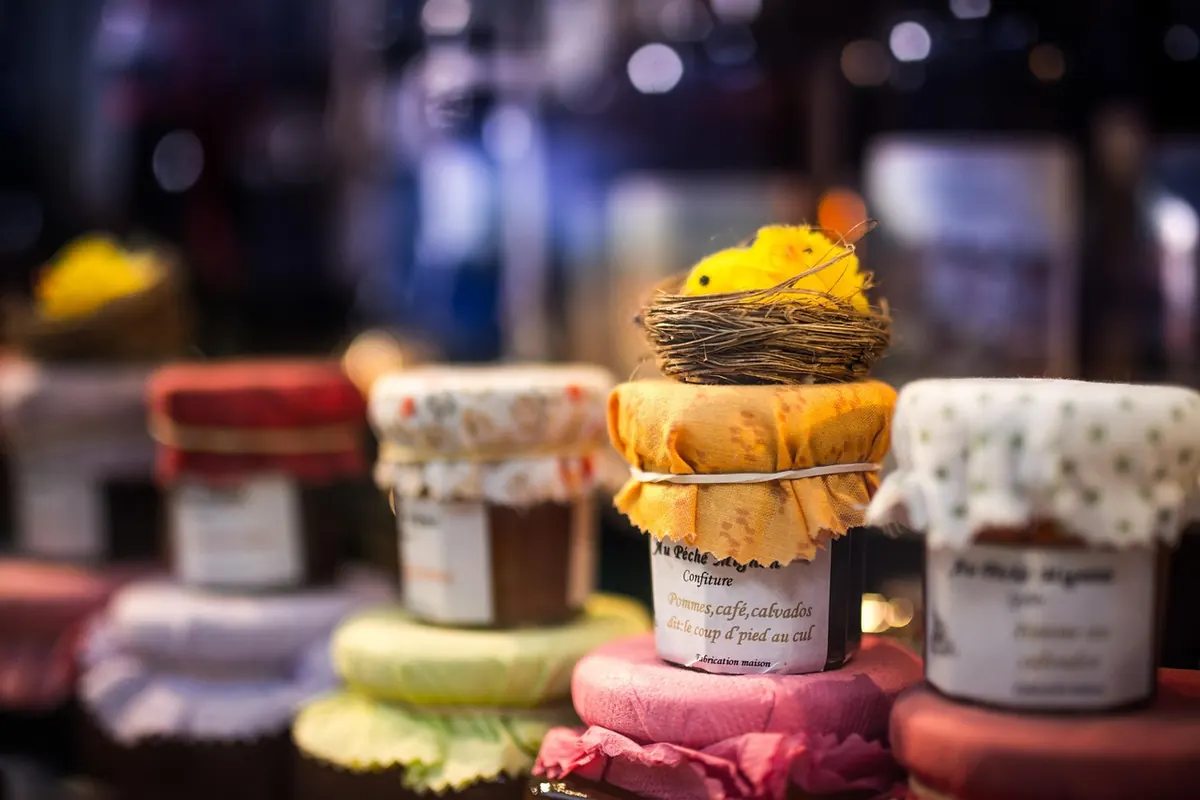
Three things pushed marmalade from a middle-class kitchen project into a national habit: cheaper sugar through the nineteenth century, reliable glass jars with lids, and railways and steamships that could move a heavy, sticky product to distant shops. Once marmalade could be made in copper pans at scale, cut to a dependable set, and stacked on a grocer's shelf, it stopped being seasonal. January's bitter oranges became an all-year breakfast.
Scotland and Ireland kept the strongest attachment. The Scottish style tends to be dark, chunky and robustly bitter; Oxford gave the world a deep, almost black version with a long, slow caramelised flavour. By the twentieth century, marmalade sandwiches had entered children's literature and the preserve had settled into the national imagination as a thing eaten at breakfast, on toast, with tea.
A jar-sized timeline
- Antiquity: quince cooked with honey in the Mediterranean, valued as a digestive sweet.
- Fifteenth and sixteenth centuries: Portuguese marmelada travels along trade routes; English apothecaries sell it as an imported luxury.
- Early eighteenth century: English recipe books give orange marmalade with shredded peel — the shape we know.
- Around 1797: the Keiller story in Dundee, followed by commercial production.
- Nineteenth century: factories, jars, exports, and a place at the breakfast table.
- Twentieth century: a cupboard staple, with regional styles and a bear-shaped mascot in a duffel coat.
What the name means now, and what to buy
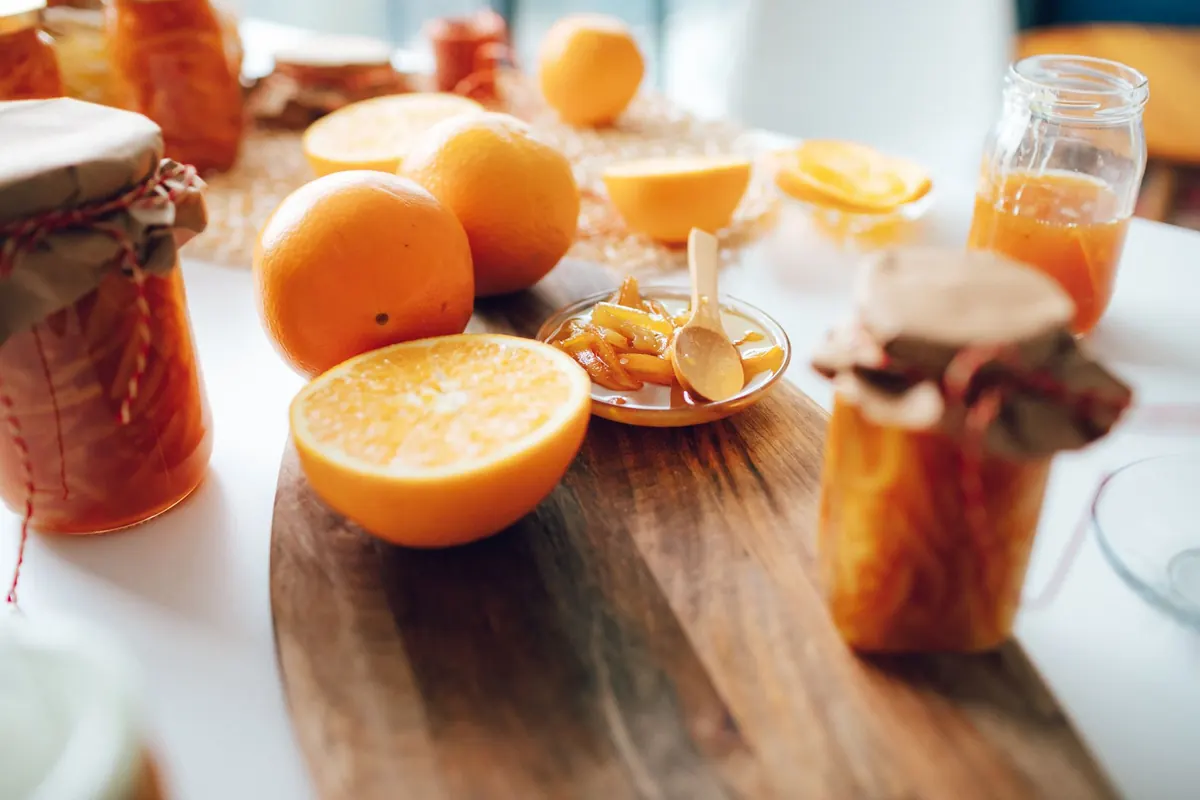
European labelling rules reserve the word "marmalade" for citrus preserves, which is why a jar of strawberry jam is never sold as strawberry marmalade. Within that boundary there is plenty of room: Seville orange, three-fruit, lemon, lime, grapefruit, ginger, whisky, and dark Oxford cuts. Cheaper jars lean on glucose syrup and added pectin; better ones let the fruit set the preserve and keep the shred coarse.
Read the label as you would for any preserve. A short ingredient list — fruit, sugar, water, maybe lemon juice or citric acid — usually signals a marmalade with real fruit character. If sugar content matters to you, marmalade is a sweet preserve by definition, so treat a thick spread as a treat and check with a health professional if you are managing your intake.
Starting your own batch
Seville oranges arrive in shops for roughly six weeks in January and February, and that window is the whole point: their bitterness cannot be faked with sweet oranges and lemon juice alone. Buy fruit that feels heavy for its size and has unblemished skin — heavy means juice.
- Soak first. Slice the peel as finely as you like it, tie the pips and pith in muslin, and leave peel, pulp, bag and water to stand overnight. This softens the rind and draws out pectin.
- Simmer the fruit before the sugar. Cook until the peel collapses between your fingers. Sugar added too early hardens the rind and no amount of boiling will fix it.
- Add sugar and boil hard. Stir until dissolved, then stop stirring and let it bubble.
- Test the set. Chill a saucer, drop a little marmalade on it, and push with a finger. If it wrinkles, it is ready. A preserve thermometer takes the guesswork out.
- Rest, then jar. Let the pan sit for ten minutes so the shred settles evenly, then pot into warm sterilised jars and seal.
Make it once and the oddity of the whole story lands: a fruit too bitter to eat raw, a peel most cooks would have thrown away, and a method that started in an apothecary's shop. All of it ends up on toast.
Photo: 453169 / Pixabay