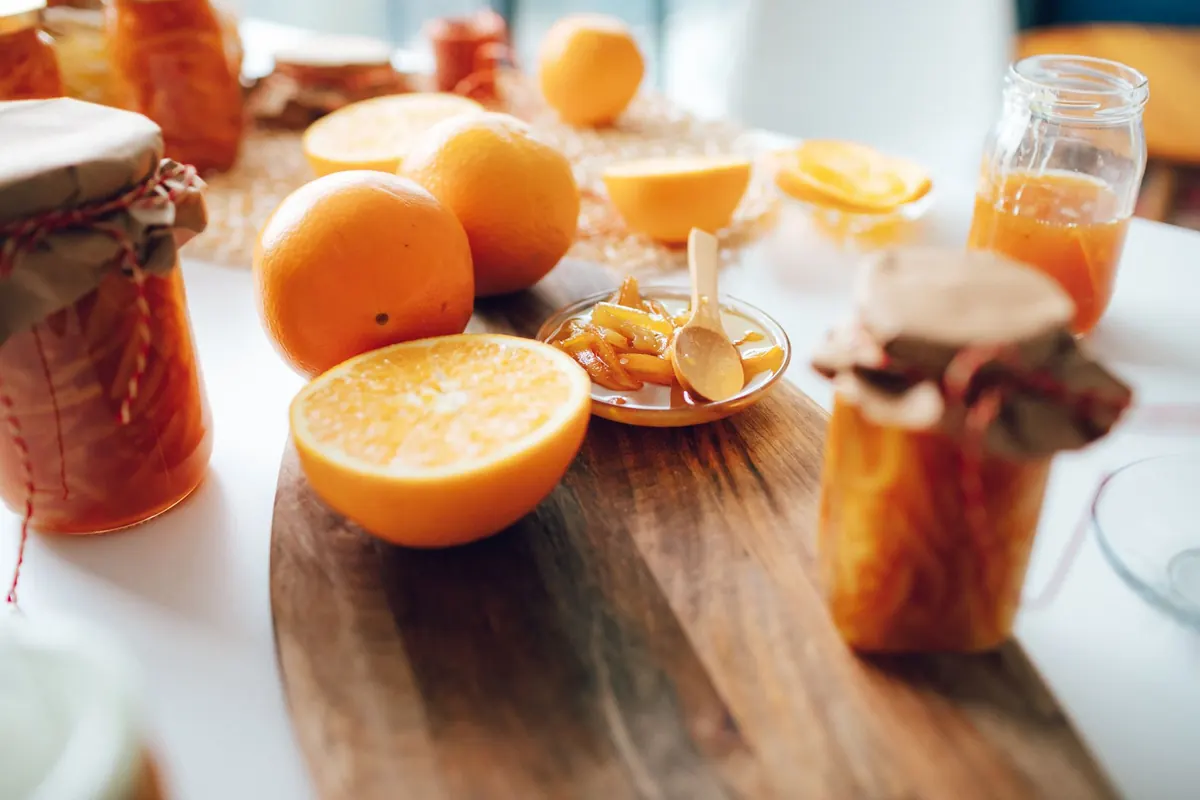
Seville oranges appear in the shops for about six weeks each winter, and the people who make marmalade every year tend to buy them by the crate. Blood oranges sit a few feet away, glossy and dramatic, often available for longer and sometimes for less. Both will set into a jar of something worth eating. They will not give you the same marmalade, and knowing why saves a lot of disappointment in February.
Three things separate them: bitter compounds, pectin, and pigment. Everything else — the shred, the sugar, the sterilised jars — is shared ground.
Two Oranges, Two Personalities
The Seville is a bitter orange, Citrus × aurantium. It is sour enough that nobody eats one over the sink for pleasure. Its peel is thin and tight, its pith generous, its seeds plentiful, and its aroma is sharp and clean rather than sweet. It exists, in the British imagination at least, for one purpose.
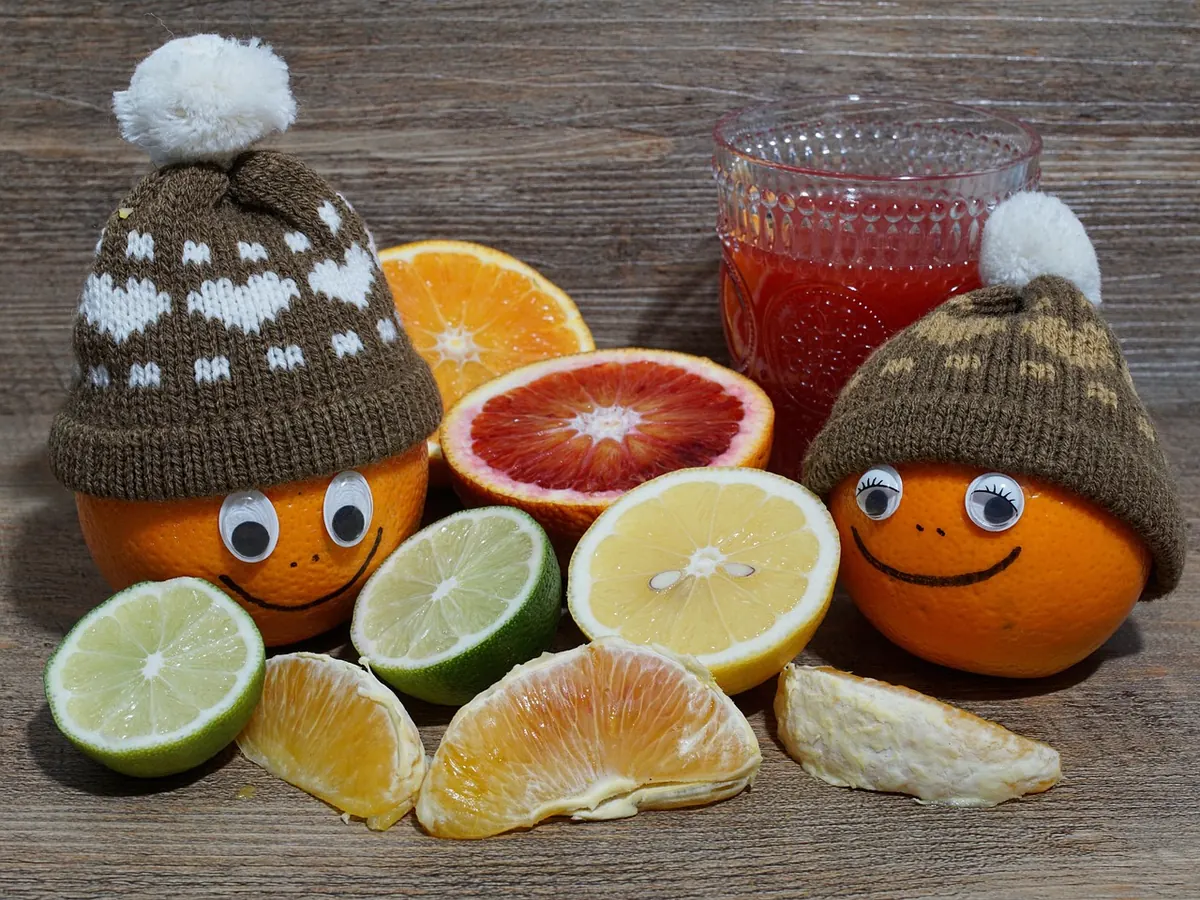
The blood orange is a sweet orange, Citrus × sinensis, with anthocyanin pigments in the flesh. Moro is the deepest red and the most dramatic in the pan; Tarocco is paler, sweeter and often juicier; Sanguinello sits between them. These are eating oranges that happen to make lovely preserves. That single distinction explains almost everything that follows.
Bitterness: Backbone Versus Perfume
Seville bitterness runs through the whole fruit but concentrates in the peel, pith and juice. It is a clean, tonic sort of bitterness that cuts straight through sugar, which is exactly why marmalade made from it tastes like marmalade rather than orange jam. Blood oranges have very little of it. A blood orange marmalade is a sweet preserve with a citrus edge; the interesting notes are berry-ish, winey, faintly floral. If you want the bitter spine that makes a spoonful of marmalade stand up to toast, it will not be there unless you add it.
- Trim, don't strip. Some pith is where marmalade gets its grip and its character. Too much gives a soapy, medicinal harshness. Leave a millimetre or two attached to the shreds and scrape the rest away.
- Squeeze the bag, then remove it. A muslin bag of pith and seeds simmered with the peel delivers pectin without letting the harshest notes take over the whole batch.
- A long simmer softens bitterness — and everything else. If you want brightness, stop cooking the peel as soon as it is tender.
- Borrow backbone for blood oranges. The zest of one Seville, or of a lemon, stirred into a blood orange batch gives the edge it lacks.
Pectin and Setting: Where Seville Pulls Ahead
Setting needs two things working together: pectin to build the network, and acid to help it form. Seville oranges arrive with plenty of both. Their seeds and pith are famously rich in pectin, and the juice is aggressively acidic. Blood oranges are lower on both counts, and juicier fruit means more water to drive off before the mixture will set at all.
The practical result is that a blood orange marmalade can sit at a rolling boil for twenty or thirty minutes longer than a Seville batch and still finish loose or, if you panic and keep going, syrupy and dark. Plan for it rather than hoping.
- Add lemon juice from the start. Two or three tablespoons per kilogram of fruit lifts the acidity and helps the set.
- Keep the seeds in muslin. Fewer seeds than Seville, but they still contribute. Squeeze the bag against the pan before you discard it.
- Bring in outside pectin when needed. A peeled, chopped cooking apple simmered with the peel, or a commercial pectin made for low-pectin fruit, following the packet instructions.
- Cook in small batches. One to one and a half kilos of sugar at a time. A huge pan takes so long to reduce that the colour suffers before the set arrives.
- Test on a frozen plate. Chill a saucer, drop a teaspoon of the mixture on it, wait a minute, push it with a fingertip. If the surface wrinkles, it is ready.
A soft-set blood orange marmalade is not a failure. Jar it as it is and use it on yoghurt, pancakes or roast chicken. Boiling it into submission to prove a point is the only real mistake.
Colour: Amber Depth and the Fugitive Red
Seville marmalade moves from gold to amber to a deep tawny brown as it cooks, and it holds that colour for years in the jar. Blood orange marmalade is a different story. The anthocyanins that make the fruit red are the same family of pigments as those in berries, and they break down under heat, light and oxygen. A batch that looks ruby in the pan will often settle to copper or burnt orange with a blush. The shreds stay orange-gold regardless, because the colour comes from the juice, not the peel.
To keep as much pink as possible: use Moro, boil hard rather than long, keep the acidity up, stir less than you instinctively want to, and store the jars in a dark cupboard. A spoonful of raw blood orange juice stirred in off the heat just before jarring will brighten the batch, though it softens the set slightly and the effect fades over a few months.
A Method That Works for Both
- Wash and dry the fruit. Halve and juice it, keeping the juice and all the seeds.
- Shred the peel to your preferred thickness — two to three millimetres for a classic cut, thicker if you like it chewy.
- Scrape most of the pith from the juiced halves. Tie the pith and seeds into a square of muslin.
- Simmer the shreds and the bag in water until the peel is completely tender, usually thirty to sixty minutes. Use enough water to cover generously.
- Remove the bag, squeezing it hard against the side of the pan, and add the reserved juice.
- Add sugar. Traditional recipes use roughly equal weights of sugar and the peel-and-water mixture. Stir over low heat until every grain has dissolved before you let it boil.
- Raise the heat and boil hard to setting point: about 104–105 °C, or the wrinkle test. For blood oranges, add the lemon juice at the start and be ready with extra pectin.
- Rest for five minutes, skim, then ladle into sterilised jars and seal.
Choosing, Blending and Keeping
If you want classic bitter marmalade with a set you can trust, buy Seville by the crate while you can. Juice what you don't cook, freeze it in ice-cube trays, and freeze shredded peel in bags — both keep for about a year and rescue you in July.
If you want a softer, more perfumed preserve, buy blood oranges and treat the batch as a sweet thing rather than a bitter one. And if you want both, blend: three parts blood orange to one part Seville peel, or a couple of Seville peels and the juice of a lemon for every kilo of blood oranges. You get the colour and perfume from one fruit, the bitterness and the set from the other.
Seville marmalade is happy with sharp cheddar, a roast ham glaze, or a spoonful stirred into a pan sauce. Blood orange is better with ricotta on toast, with yoghurt, or loosened with vinegar as a dressing. Keep both in a dark cupboard; Seville will hold its colour, blood orange will drift toward amber, and neither will last as long as you expect.
One last thing: marmalade is a sugar preserve, whatever the fruit. If you are managing blood sugar, treat a spoonful as a treat and take advice from your own doctor or dietitian rather than from a recipe.
Photo: suju-foto / Pixabay